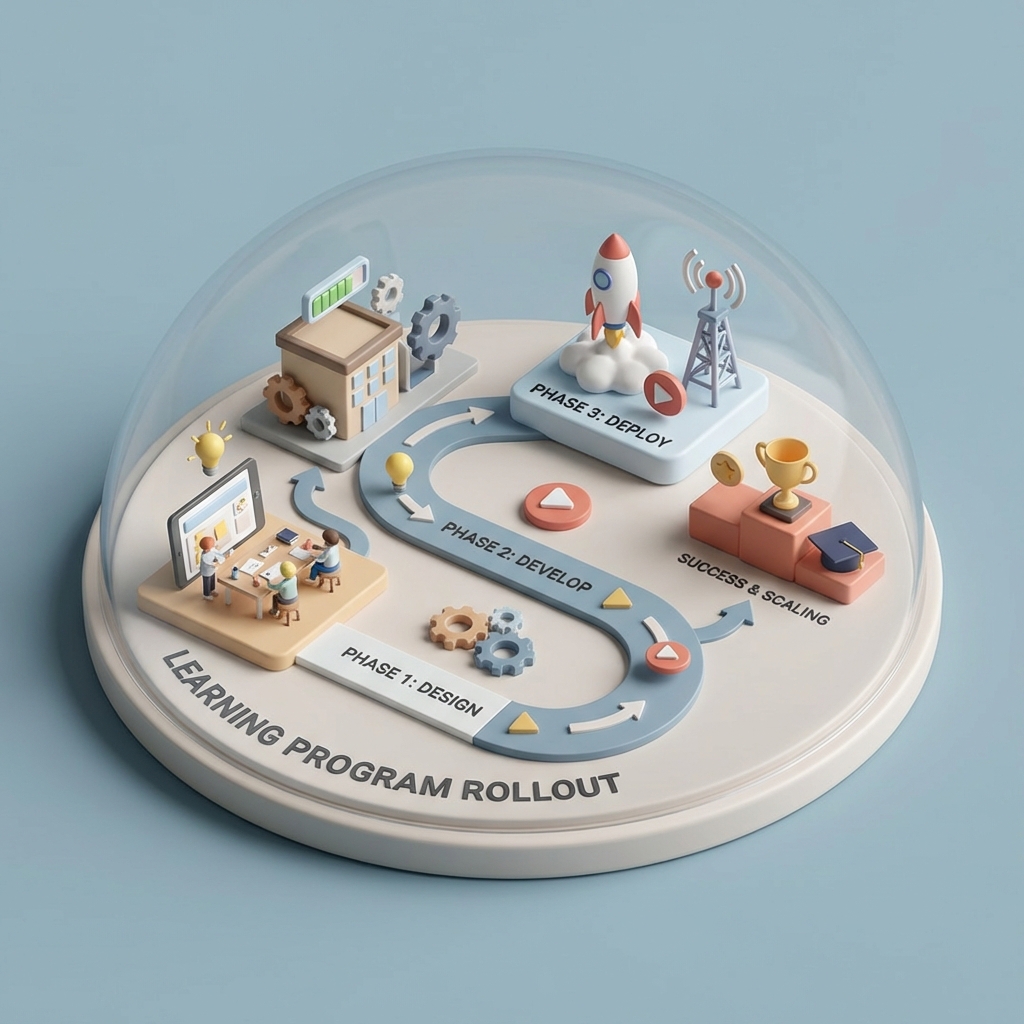
Continuous Learning Program Schedule

A structured continuous learning program empowers teams to stay current with industry trends and develop new skills. Proper scheduling ensures balanced learning opportunities without disrupting daily operations, maximizing both individual growth and organizational development through strategic knowledge acquisition.

Andres Rodriguez

Chief Marketing Officer

What is a Continuous Learning Program?

A continuous learning program is a structured approach to ongoing education and skill development within an organization. Unlike traditional one-time training sessions, continuous learning creates a culture where employees regularly acquire new knowledge, refine existing skills, and adapt to evolving industry demands. This systematic approach ensures that your team remains competitive, innovative, and capable of meeting future challenges with confidence and expertise.

Why Do Organizations Need Continuous Learning Programs?

In today's rapidly changing business landscape, static skill sets quickly become obsolete. Companies that invest in continuous learning programs experience higher employee retention, improved performance, and stronger competitive positioning. These programs help bridge skill gaps, boost employee engagement, and create a more adaptable workforce. Moreover, they demonstrate organizational commitment to employee growth, which enhances company culture and attracts top talent seeking career development opportunities.

Key Components of an Effective Continuous Learning Schedule

Building a successful continuous learning program requires careful planning and strategic scheduling. Here are the essential elements to include:

  • Skills Assessment. Begin by evaluating current competencies and identifying gaps between existing skills and future organizational needs. This baseline assessment guides program development and helps prioritize learning objectives.
  • Learning Pathways. Design multiple tracks tailored to different roles, experience levels, and career aspirations. Include technical skills, soft skills, leadership development, and industry-specific knowledge areas.
  • Flexible Scheduling. Balance learning activities with operational requirements by incorporating various formats: self-paced online modules, scheduled workshops, mentoring sessions, and hands-on projects.
  • Progress Tracking. Implement regular checkpoints to monitor advancement, celebrate achievements, and adjust learning plans as needed. This ensures accountability and maintains momentum throughout the program.
  • Resource Allocation. Plan for necessary learning materials, instructor time, technology platforms, and budget requirements. Consider both internal resources and external training providers.
  • Knowledge Application. Create opportunities for learners to immediately apply new skills through real projects, cross-functional assignments, or pilot programs.

The success of your continuous learning program heavily depends on effective project management and scheduling. With multiple learning tracks, diverse participant schedules, and various resource requirements, coordination becomes complex without proper planning tools.

How Instagantt Enhances Your Continuous Learning Program

Managing a continuous learning program involves coordinating multiple moving parts across extended timeframes. Instagantt's Gantt chart capabilities provide the visual clarity and organizational structure needed to execute successful learning initiatives. You can map out entire learning journeys, track individual progress, and ensure optimal resource utilization throughout your program.

With Instagantt, you can visualize dependencies between learning modules, schedule instructor availability, manage classroom bookings, and coordinate with external training providers. The platform allows you to create individualized learning timelines while maintaining oversight of the entire program's progress. Team members can see their personal development roadmaps while managers track organizational learning objectives.

Transform your approach to employee development by implementing a well-structured continuous learning program. Start planning your comprehensive learning schedule today and watch your team's capabilities grow systematically over time.
Ready to simplify your project management?

Start managing your projects efficiently & never struggle with complex tools again.